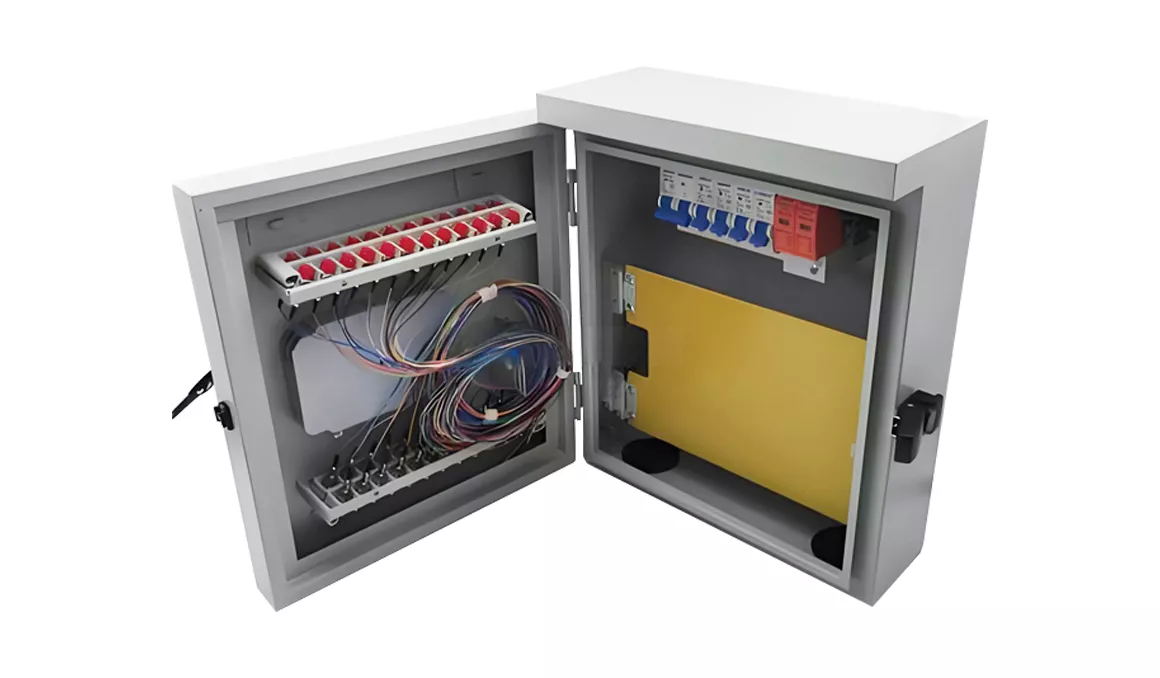
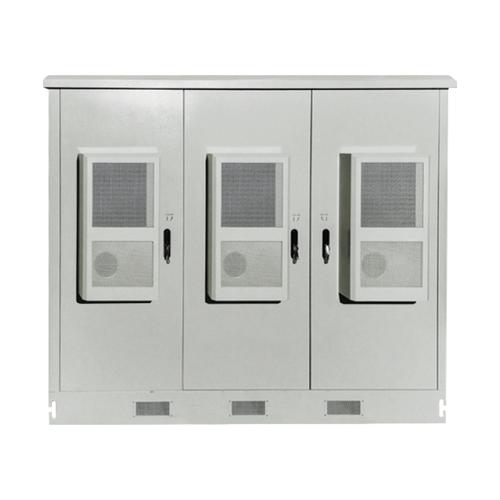
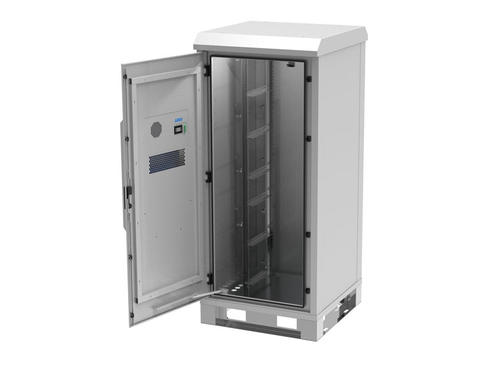
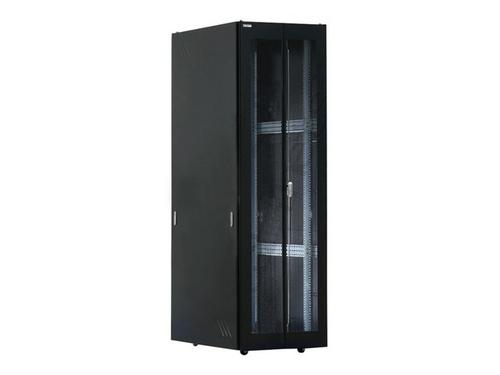
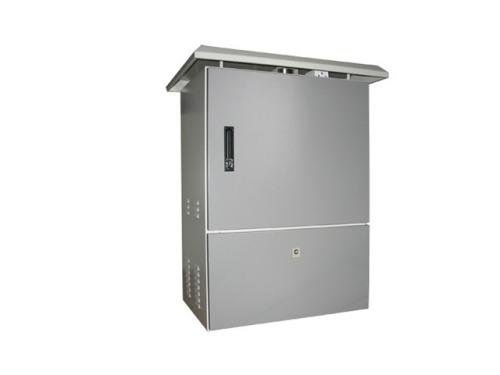
Outdoor integrated cabinets are mainly used for wireless communication base stations, including the new generation 3G system, integrated communication/network services, access/transmission switching stations, emergency communication/transmission, etc. Next, let's learn about their composition and advantages.
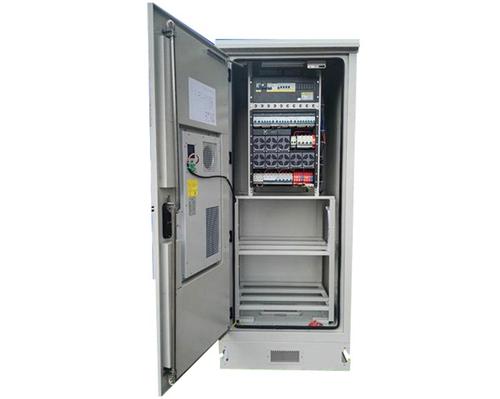
I. Composition of Outdoor Integrated Cabinets:
1. Equipment Compartment:
Located on the right side of the cabinet, the equipment compartment is separated from the battery compartment by a partition to facilitate heat insulation for the equipment space.
2. Battery Compartment:
Used for installing storage batteries. Thermal insulation cotton is attached to the outer panels of the cabinet to achieve thermal insulation. The battery compartment is also equipped with a sunshade cover for sun protection and waterproofing. The cabinet is provided with a ventilation device to release harmful gases generated by the storage batteries.
3. Door and Door Lock:
The cabinet door adopts an embedded structure with tight gaps. The door opening angle is >110°, and the door is equipped with a limiting structure that functions when the door is in the "open" state. The door lock uses a three-point structure of pull rod and lock plate, and an additional padlock can be installed. It has a firm structure and strong anti-theft performance. Each cabinet door is equipped with a door-open alarm sensor to cooperate with environmental monitoring.
4. Dimensions of Air Intake Equipment:
The integrated outdoor cabinet for base stations adopts a standard-sized cabinet.
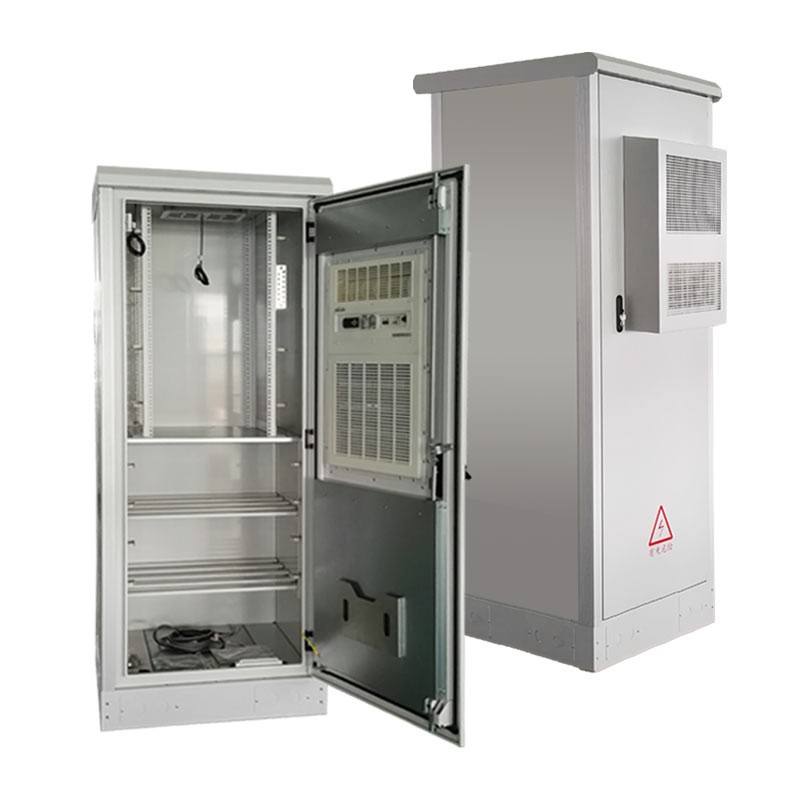
II. Advantages of Outdoor Integrated Cabinets
1. The cabinet features dustproof, sunproof, and rainproof properties, fully adapting to outdoor environments.
2. The equipment compartment adopts ventilation for heat dissipation (a heat exchanger can also be selected as the heat dissipation equipment), with an MTBF of ≥50,000 hours.
3. The battery compartment uses semiconductor refrigeration (not available for roadside-type cabinets).
4. Each cabinet is equipped with a DC -48V lighting fixture.
5. The cabinet has power and environmental monitoring functions, capable of realizing and uploading alarms for power failure, power fault, access control, temperature, humidity, smoke, water immersion, battery voltage, etc.
6. The cabinet has a reasonable layout, facilitating operations such as cable introduction, fixing, and grounding, as well as maintenance. Power cables, signal cables, and optical cables have independent entry holes to avoid mutual interference.
7. All cables used in the cabinet are made of flame-retardant materials.
8. The cabinet is assembled on-site.
——END——